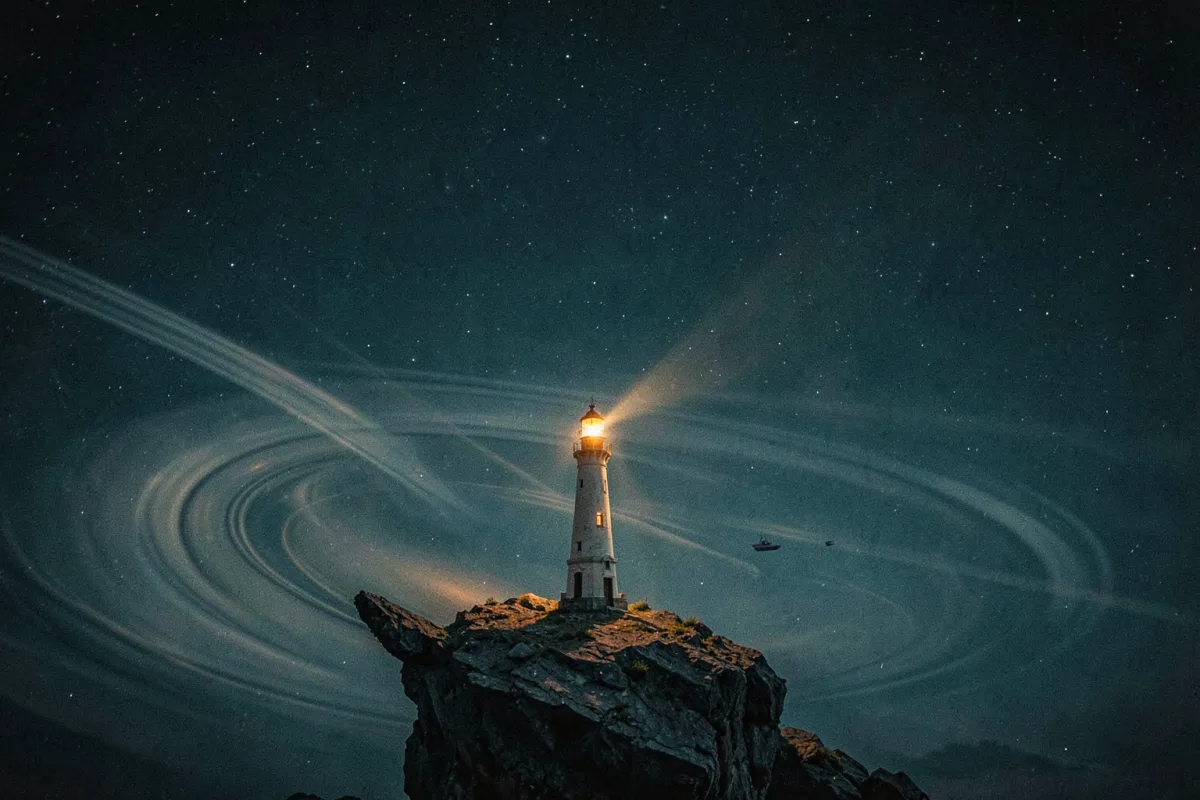
The Lighthouse at the Edge of Orbit
The automation arrived in a crate the size of a coffin, and it fit inside the lamp.
Keeper Yuna watched the engineers bolt their little philosopher into the great lens — a self-correcting intelligence that could aim the beam to the microradian, forecast solar weather, file its own maintenance reports. It had taken eleven minutes to install and thirty seconds to make her obsolete.
“Contract ends at dawn,” the lead engineer said, not meeting her eyes. “The beacon doesn’t need a keeper.”
“The beacon doesn’t need anything,” Yuna agreed. “That’s what keeps me here.”
Her lighthouse stood on a shard of rock at the edge of the shipping lanes, where the freighters swung wide around the gas giant’s rings. For nineteen years she had swept the dark with light: here is the road, here are the rocks, go safely. Ships answered with one flash of their running lights — thank you, keeper — and she knew every crew on the lane by their rhythm. The Maren Holt always flashed twice. The old tug Cassini flashed in a lazy waltz time.
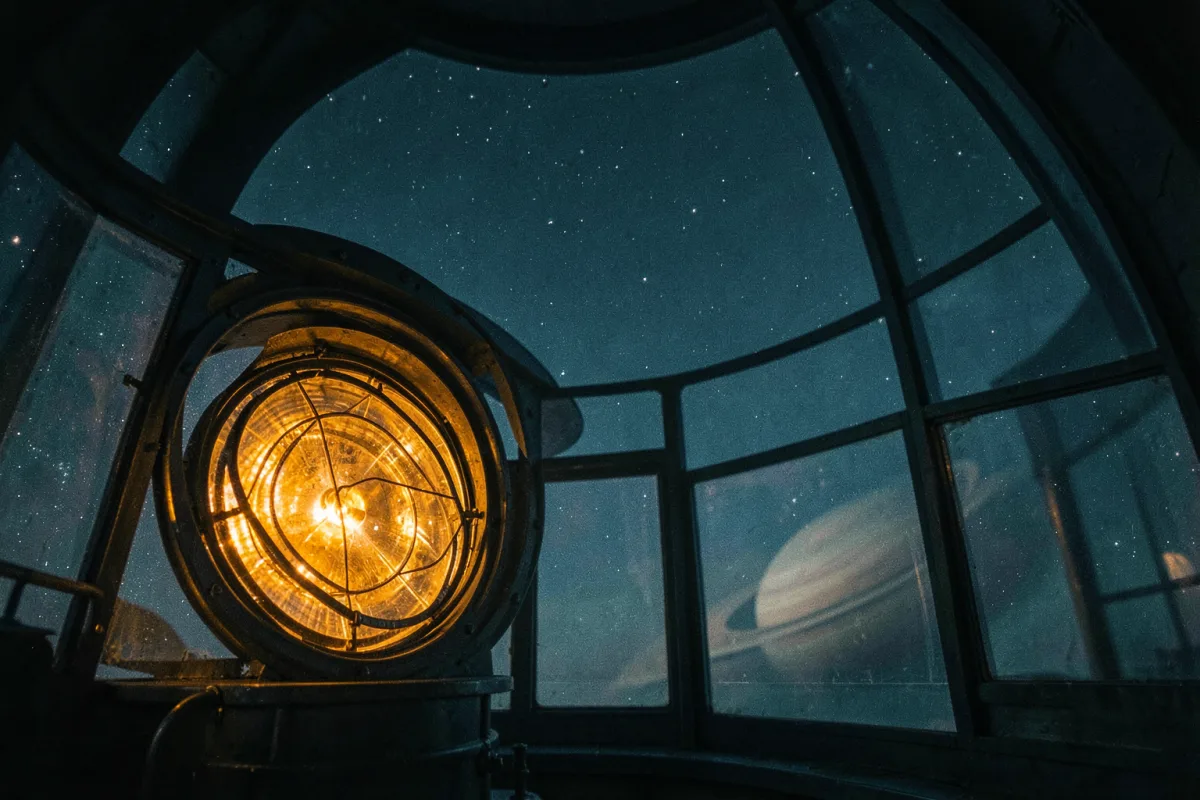
Her last watch. She told herself she would spend it like any other: tea, logbook, the beam’s long amber stride across the stars. But at 02:40 station time, when the philosopher was mid-diagnostic and the lamp room hummed in a key she’d never heard before, her console lit with an old thing — a light-call on the emergency band, two flashes, pause, one flash. Nobody used the optical band anymore. Nobody even carried shutters that could spell it.
The new intelligence had already translated it, blandly: UNKNOWN ORIGIN. NON-STANDARD PROTOCOL. RECOMMEND DISREGARD.
Yuna disregarded recommendations the way her grandmother disregarded fences. She killed the diagnostic, took manual control of the lens — nineteen years of muscle memory waking up like a house with the lights going on room by room — and swung the beam out past the lanes, hunting.
There. A freighter she didn’t recognize, dark except for one blinking shutter, drifting inside the ring’s debris boundary where no ship could steer itself, its autopilot surely dead. Any automated beacon would never see it: wrong protocol, wrong bearing, recommend disregard. But a keeper sees everything, because a keeper has nothing else to do but look.
She couldn’t tow them. She couldn’t reach them. What she could do was what lighthouses had always done for captains too proud to call for help: lay the beam down like a plank across the dark, steady on the safe corridor, holding it there by hand against the drift — an invitation written in light: follow me out.
For two hours she held it. The freighter crept along her beam, degree by degree, clearing the debris boundary at 04:51, and its running lights flashed once.
Once only. A crew she’d never met, saying thank you, keeper.
At dawn the engineers found the philosopher logged offline for 2 hours 11 minutes with cause unknown, and Yuna’s signature on her contract release, and on the wall of the lamp room a line scratched in nineteen years of habit beside hundreds like it — one more tally for the ships that went safely past.
The new keeper never learned who to thank for it. That was always the point.